Monday, April 6, 2020

Post 5 - WIll we have enough resources? - Mayra Galvan Romero

      This article, written by Dennis Dimick for National Geographic, mainly talks about if we have enough resources for our world's population. Right now, we have more than 7 billion people on our Earth. This number can skyrocket to a whopping 10 billion by 2050 -- 30 years from now. This amount of people can be detrimental to the amount of available resources that we may have in the future, such as energy, food supplies, and freshwater that we are able to drink. Will our earth be able to handle having that many people at once?
      The article continues to say that we have been in a 'population boom' for decades now. In 1900, there were 1.6 billion in the world, and by 2000 there were more than 6 billion. By 2011, that number increased to about 7.2 billion as said in the article. My initial thoughts about this is that obviously having more people inhabit our earth means more pollution. I can see why having so many people can be harmful for our earth in more ways than one. I don't really think there is a fix for this, though, unless every country implements a one-child law like China did, but that seems a little unethical to me for some reason...
      Although population keeps rising, I hope we figure a way to extend our resources to be able to keep up with more people on our earth. As the article says, advances in agriculture has helped us with this, and I hope it continues.

Source: https://www.nationalgeographic.com/news/2014/9/140920-population-11billion-demographics-anthropocene/#close

Shibuya Intersection & Crossing, Tokyo, Japan - This is the busiest...

Friday, April 3, 2020

Fracking 5

Michael Householder 5

So in my last post on fracking I did not explain the process very well so I am attaching a video describing it a little better. Fracking is harmful to the environment releasing oils into the water and soil, but how do we reform the process to make it better? If we stop fracking completely oil prices will skyrocket due to the import of oil from overseas. Problems are only ok to bring up with a solution.

Friday, March 20, 2020

Are dams good or bad-Ryan Wilburn

Are dams good or bad?

The good side to dams are that they provide energy, drinking water, flood control, and recreation. Dams are engineered structures meaning they make our life high quality. About 3% of the dams in the United States produce energy and the largest renewable energy. 

The bad side to dams are that they are very expensive and have a lot of hard to keep them up and running. In the article, it talks about that dams are meant to fail. The reason is because they lose reservoirs and the dams collapses.

So you pick if they are good or bad?


Monday, March 9, 2020

Fracking and natural gases 3

Fracking is using water, chemicals, and sand to bust shale and bedrock to release gas and oil. It is beneficial and helpful to creating jobs but harmful to the environment. Fracking releases some oils and gas into the water reservoirs underground which actually could lead to flammable water which is for obvious reasons is harmful. However economically it creates so many jobs in chemical engineering and mechanical engineering to create the equipment and everything for the job.
https://www.nationalgeographic.com/environment/energy/great-energy-challenge/big-energy-question/how-has-fracking-changed-our-future/#close


Wednesday, March 4, 2020

Post 5: Why Animals are Important Resources- Emilia Schleper

Animals as Resources 

Humans often take advantage of our animal resources, by mistreating or causing harm to them. Animals are a large source of food for people and they also supply us with furs and other animal based products like leather. Society only cares about the animals seen as pet such as cats and dogs, the ones we like to see happy and healthy. Often forgetting animals similar to, but not limited to pigs, cows, horses, goats and sheep. These animals regularly face cruelty and suffering, but society only worries about any “unnecessary” cruelty. I see no difference between unnecessary cruelty and cruelty, they are actually the same thing only to a different extent or cruelty. There are many more humane ways to raise and treat or slaughter animals, but it is usually more expensive and/or time consuming for farmers. Here in the U.S. it is illegal to slaughter horses for human food but not animal food. We as a society place our desires over the needs of these animals. We view these animals as not having consciousness or feelings because they do not have the same cognitive abilities humans possess. We often over work and breed animals to meet the demands of society. 

Article: https://www.veganism.com/animals-as-resources/


Time is running out for sand blog 4

Time is running out for sand

Sand and gravel are being used and extracted a lot faster then it can be replaced as of now. Sand is one of the key ingredient of modern life but yet no one knows how much is being mined and how much of it is left. From the glass bottle you drink from to the computer you work, sand is there. Their is about 32-50 billion tones of sand used each year, mainly for the use of concrete, glass and electronics. As of right now China, India and Africa are the ones that are in demand for sand. Mining speeds up the process of erosion as you can see with the picture I am showing. If we are not careful, it can get worse. -Ryan Wilburn


Authors: Jim best and Mette Bendixen


https://www.nature.com/articles/d41586-019-02042-4

The Impact of the Fishing Industry

      In this article, I learned that over fishing is a huge problem that we currently have and it contributes to a lot of our pollution. I had no idea that 'over fishing' was a thing and some of the methods that the article talks about that people/companies use to fish honestly blew my mind away.
    First of all, over fishing is the removal of fish at a huge rate to the point that the species cannot 'replenish' themselves in time. This obviously leads to a bunch of problems in our world's ecosystem, and that's why it affects us so much. As the article said, the fishing industry affects a lot of marine conservation issues. Some of these include fish population, water pollution, and a thing called habitat degradation. One of the ways that mass fishing happen sis by "netting". This is when a fisherman literally drags a huge net across the bed of the ocean floor. This destroys the coral reefs that are sometimes on the sea floor. The coral reef is home to many different kinds of species and is an essential part of the ocean. Another way that over fishing occurs is by using explosions. This kills fish underwater but also pollutes the ocean.
     This is an important topic that I personally think we should all know about. We don't really think about it when we enjoy our seafood, because I certainly don't, but we should know about how we are receiving our food and where it comes from and how it can affect our world.

Image result for overfishing
Mayra Galvan Romero

Source: https://www.worldatlas.com/articles/all-about-the-fishing-industry.html

Tuesday, March 3, 2020

Post 4 Endangered Animals- Emilia Schleper

Endangered Animals

     Our planet now has 41,415 different species of animals and plants on its endangered list, almost 16,306 of those species are threatened with extinction. We are in the middle of the earths sixth mass extinction, the last one took place over 65 million years ago. This extinction is caused almost entirely because of humans and our extensive use of our natural resources. Nature simply can’t support the pressure we put on the environment. We have over hunted, farmed, and industrialized our planet. Our population goes unchecked, growing at an unsustainable rate for the Earth to keep up with. The human population is at the top of the food chain, giving us the chance to over populate the earth. The human races overconsumption of Earths resources often disrupts numerous ecosystems in many ways. We often destroy their habitats with our pollution, deforestation, agriculture and industrialization.
     There have been many treaties and laws put into action to try and slow the decline of these species. Theses laws make it illegal to harass, harm, pursue, hunt, shoot, wound, kill, trap, capture, or collect any of the species on the list. Although these species are still endangered they are still considered valuable buy people all over the globe who purchase them for the products they make. 

Wednesday, February 26, 2020

The U.S Dominates Oil and Gas Production


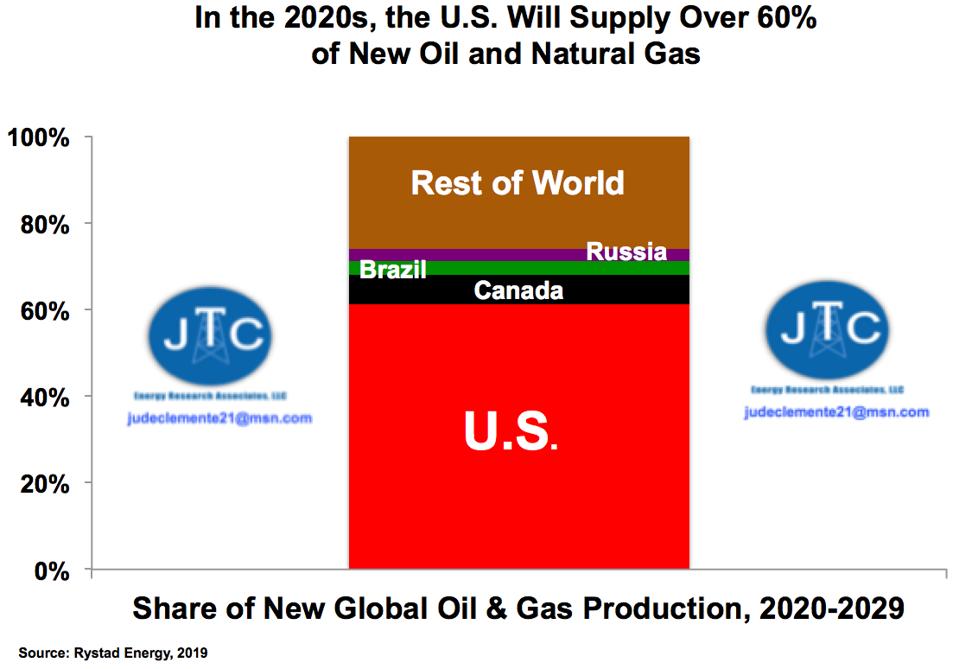
     In this article written by Jude Clemente for Forbes, I learned that our country, the United States has more than doubled the oil reserves that we have to around 65 billion barrels. On top of this, our natural gas reserves have risen to over 80% to a whopping 430 trillion cubic feet. We are now the largest producer of oil and gas, and I think that's pretty crazy. We are also expected to supply over a whole 60% of new oils and gasses to the world in the 2020's.
New oil and gas supply in the 2020sImage result for fossil fuels
     I think this shows just how much fuel we use in our everyday lives. Our use of different fuels are rising every single day, and our supply of these gasses constantly increasing shows this.

Source: https://www.forbes.com/sites/judeclemente/2019/12/08/the-us-dominates-new-oil-and-gas-production/#5fe9dccb1cce
Mayra Galvan Romero

Tuesday, February 25, 2020

Post 3 Deforestation -Emilia Schleper

 Deforestation 

Deforestation is the active permanently removing trees from the environment  to make away for something else. Forests make up more than 30% of the worlds land surfaces. They are home to over 80% of the worlds terrestrial bio diversity.  Forests provide food, medicine, jobs and fuel for over 1 billion people worldwide.
Most of today’s deforestation occurs in tropical areas. These forests are being destroyed to make way for agriculture and grazing.  Naturally occurring fires are uncommon,  but very intense and devastating to the surrounding the wildlife.  There are also human lit fires, the valuable timber is first harvested and then  any other surviving vegetation is burned away to make way for livestock and crops.  Other forests  are cleared to make way for palm oil plantations. Palm oil is a very common vegetable oil that is found in over half of all grocery store products.
 Deforestation also causes a drop in the amount of carbon dioxide absorbed by the trees.  These trees play in important role in climate change,  they are estimated to be providing  23% of  The climate mitigation needed to slow down climate change.

https://www.livescience.com/27692-deforestation.html

Natural resources skyrocket Ryan Wilburn blog 3


Global use of natural resources is skyrocketing 

Over the last 50 years, material extraction and consumption has tripled. So we are going though materials much quicker then we have before. Also since high-income countries can extract more materials, the low-income countries rarely seen any growth in material consumption, even though they have the highest need for higher material living circumstances. They are struggling to get the materials they need for their living. 


Author: Arthur Wynes


Wednesday, February 19, 2020

2nd Post Mayra Galvan Romero

     
Image result for water dams
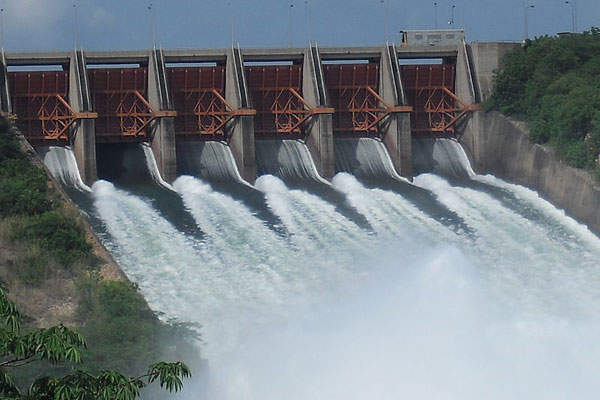
       Water dams have been a way for people to get more water for years. It is also a way for cities to generate electricity. But do dams always work? According to this article, they may be causing more harm than good. Take the city of Las Vegas as an example, where the reservoir created a 'false sense of abundance' where the amount of water available does not balance with the population that it is supposed to support. To combat this problem, different authors have recommended reducing water consumption and even the installation of water-efficient fixtures and appliances.
      Another 'fix' is to capture rainfall and use it. One of the cities that uses this method is Los Angeles. This also includes the reusing of water. This is such an important issue because water is a resource that could be put on restriction, and I don't want to imagine a world like that. 


Post 5 - WIll we have enough resources? - Mayra Galvan Romero

      This article, written by Dennis Dimick for National Geographic, mainly talks about if we have enough resources for our world's pop...